
One of my running mates, Jeannette Legge, had been speaking about her visits to Guatemala for the past few years. There was always a quiet joy in her voice and a sparkle in her eyes when she described the work being done there—something deeper than enthusiasm, something rooted. During and after our long runs, I often found myself wondering what kept drawing people back to this place, year after year.
In 2026, my own path opened, and I joined a group of 25 others on the journey. Before we left, Dan Wolf and Steve Legge gathered us to outline the work ahead. Listening to them, I felt both curiosity and doubt. Having spent most of my life shaped by Western systems—timelines, efficiency, predictability—I struggled to imagine how such an ambitious project could unfold within the short time we had.
On the early morning of January 24, we left Chicago on a direct flight to Guatemala City, landing at La Aurora International Airport. Though the city carries a reputation for danger, our leaders had carefully planned our route. A chartered bus took us directly to Hotel Mansion del Rio in Río Dulce, where we rested for the night. The next morning, after breakfast, we boarded a boat. As the water carried us forward, the noise of the outside world slowly faded. Within an hour, we arrived in Livingston—a small town reachable only by water, quietly held between river and sea.
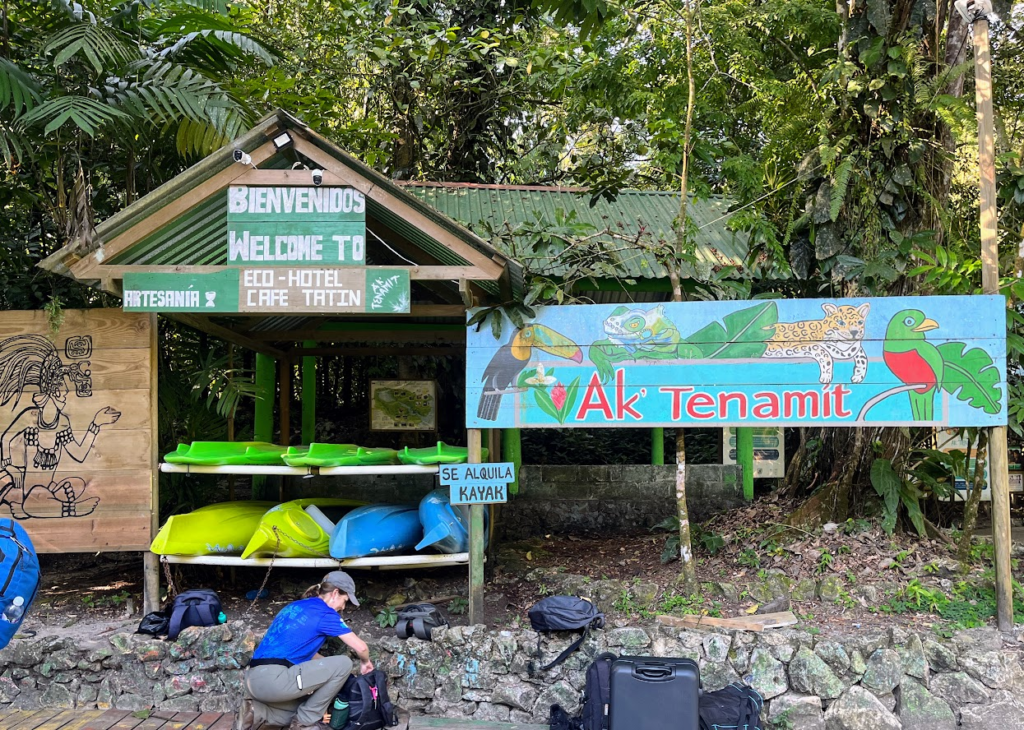
We had come to serve at Ak’ Tenamit, a school and community development organization founded in the early 1990s by Steve Dudenhoefer in partnership with local leaders in the Río Dulce region. Its mission is to strengthen cultural identity and support dignified, sustainable livelihoods among Indigenous Q’eqchi’ and other Maya communities. From the moment we stepped onto campus, it was clear this was not simply a vocational school. It was a place where culture, education, and spirit were woven together.
Throughout the campus were simple Mayan prayer spaces—quiet reminders that education here is not only about acquiring skills, but about honoring identity. The organization is led by a Guatemalan nonprofit board composed entirely of Q’eqchi’ Maya members, with representation from the local Garífuna community. Leadership has intentionally shifted into local hands. There was something profoundly right about that—trust placed where it belongs.
The purpose of our visit was to help build a dormitory that would house 150 girls. Yet from the beginning, we were reminded that no role was fixed. We were invited to contribute where needed, to remain flexible, and to serve with openness.
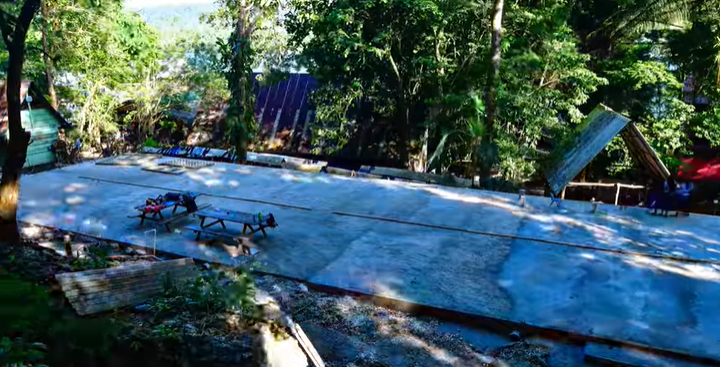
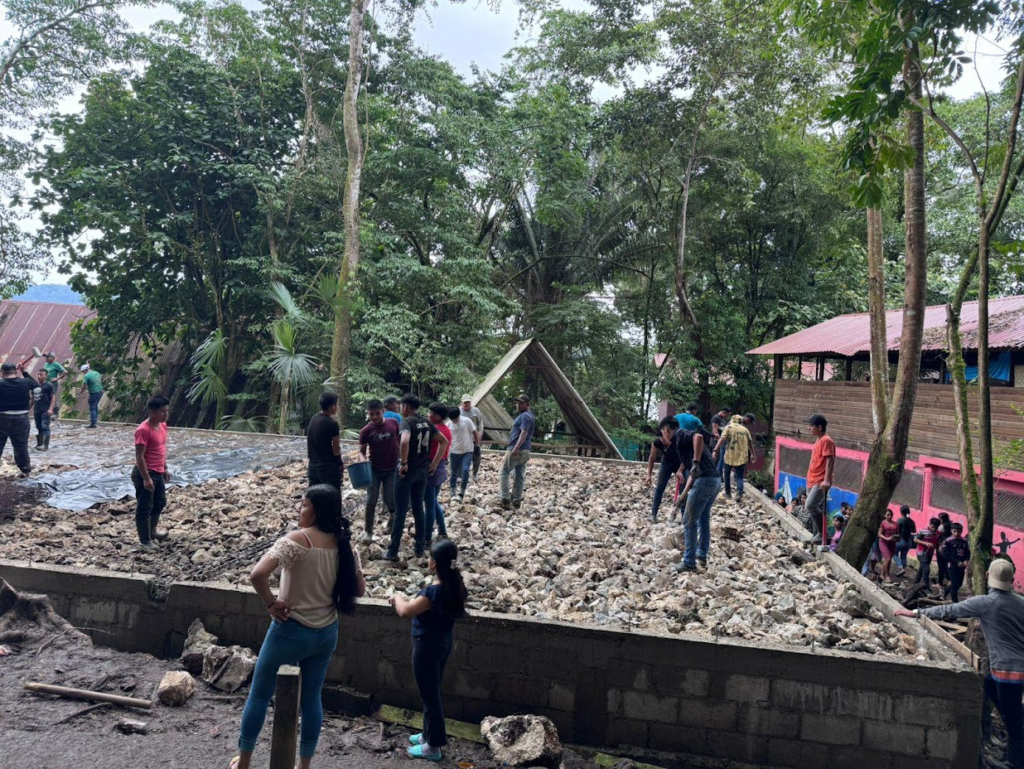
The foundation had already been poured before we arrived. Lumber was sourced locally; additional tools were carried in our suitcases—small offerings brought from afar.
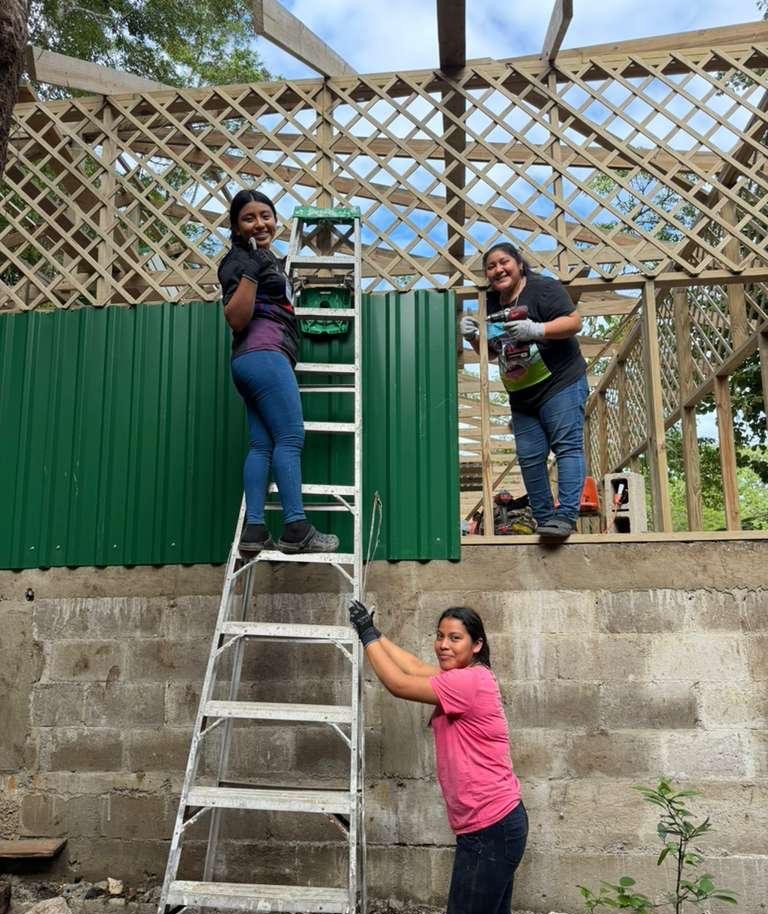
I joined the construction team. Our task was to erect the building’s side frames, carefully drilling, aligning, lifting, and securing each panel. There was no hired labor. A few among us had construction experience and guided the rest. The rest of us learned by doing.
What transformed the work, however, was the presence of the students. Ten to twelve of them worked beside us at any given time, while others helped on different projects across campus. Construction is one of the vocational paths offered at Ak’ Tenamit, and the students approached the work with genuine eagerness. They were curious, attentive, and unafraid to try. When challenges arose, they stepped forward—not always with perfect solutions, but always with heart and effort. Watching them, I was reminded that learning is as much about courage as it is about instruction.
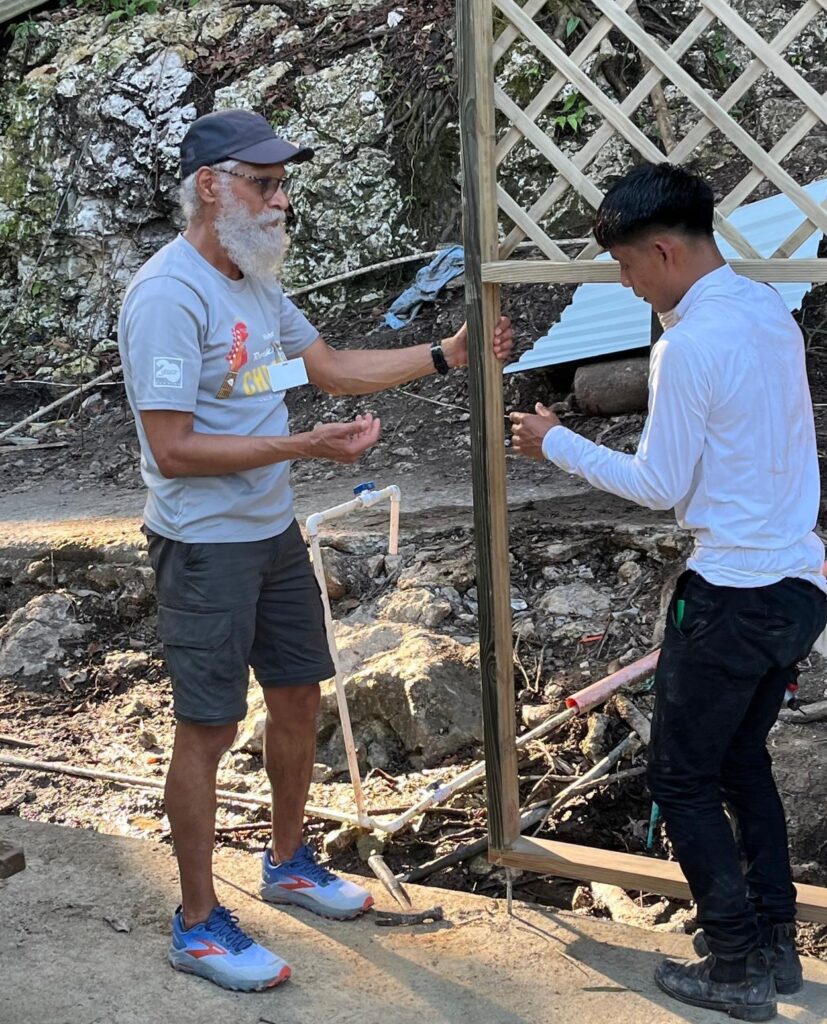
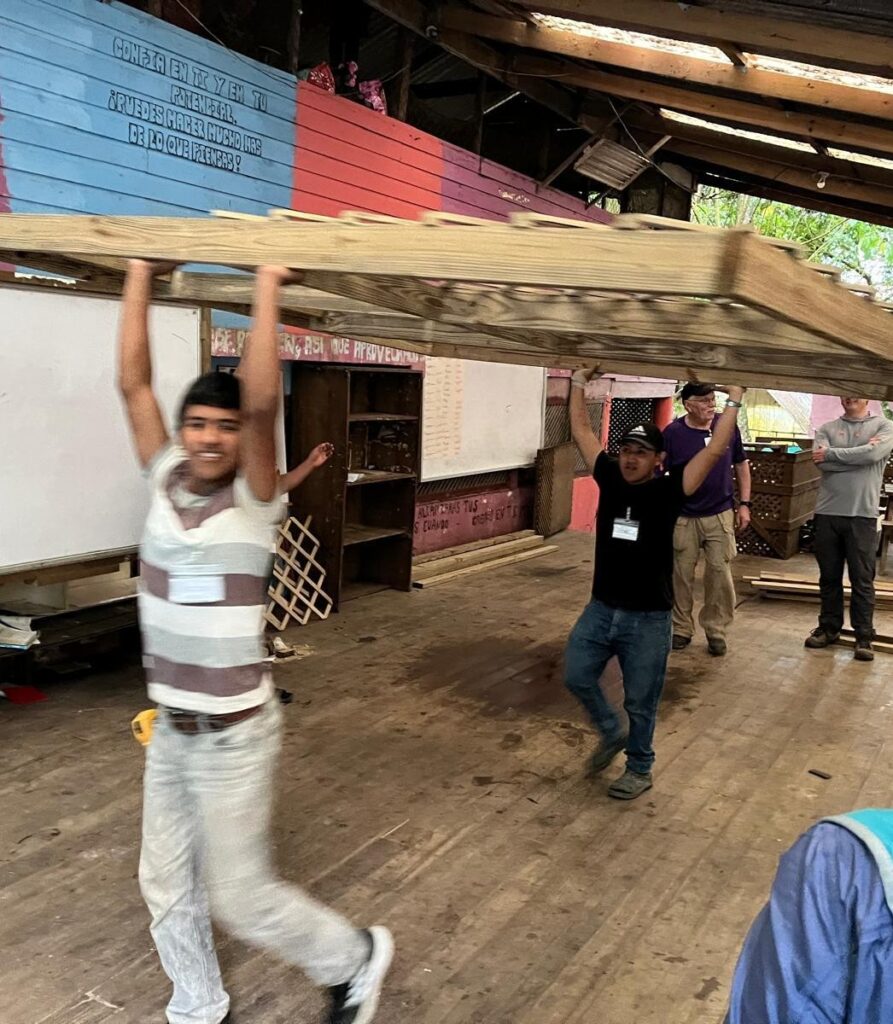
The students’ first language is Q’eqchi’. They also study Spanish and English, though English is limited for many. Communication required patience, gestures, laughter, and frequent use of translation apps. I discovered that understanding does not depend solely on shared vocabulary. When intention is sincere, meaning finds its way.
One afternoon, while installing sheet metal, I nicked my wrist on a sharp edge. A little blood, a Band-Aid, and back to work. It felt almost symbolic—a small discomfort in service of something far larger.
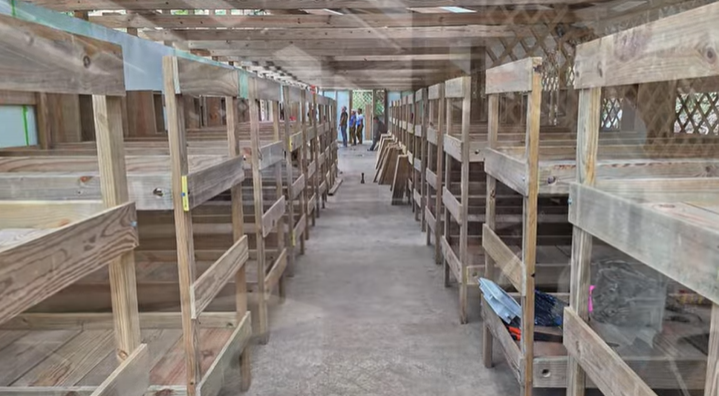
Around us, other teams were building 78 bunk beds, assembling 98 cupboards, and constructing solar-powered charging stations for about 150 girl students. Some volunteers taught English, yoga, crocheting, and baking. Each contribution—whether hammering nails or teaching cupcakes—carried the same spirit: to give what we could.
Meals were another quiet lesson. Lunch was prepared and served by students early in their hospitality training. Dinner was served at the school’s restaurant, operated by graduating students. The food was prepared from scratch and presented with care and pride—hospitality practiced as both skill and dignity.
Evenings in Livingston were peaceful. With little distraction, conversations lingered. One evening, a few of us walked slowly through town, observing daily life unfolding in its own rhythm. It was simple, unremarkable—and deeply grounding.
In the end, it was not the building itself that stayed with me, but the children—walking to school in the morning, returning home tired in the evening. In those brief moments, nothing felt unfamiliar. Different place, same humanity.
The dormitory will house 150 girls. It will offer safety, opportunity, and continuity. But what I received from this journey cannot be measured in lumber or square footage. I returned home with a quieter mind, a softer heart, and a renewed belief that when people come together in humility and trust, meaningful things can be built—both outside and within.
Rotary Buffalo Grove, IL, is on a great path, leading and providing opportunities for these kids. Support the good cause, if you can!!!
Additional Pictures:
The site was ready before we got there
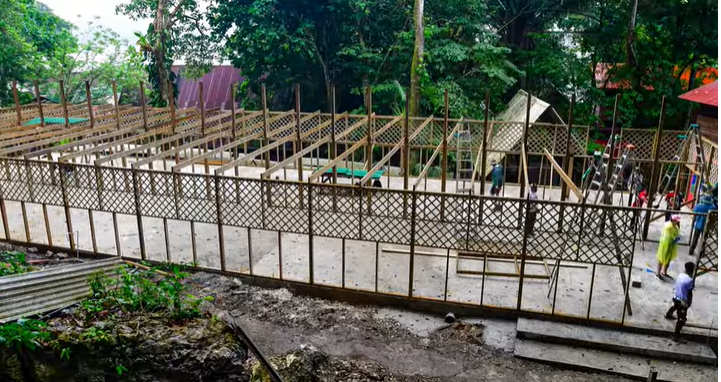
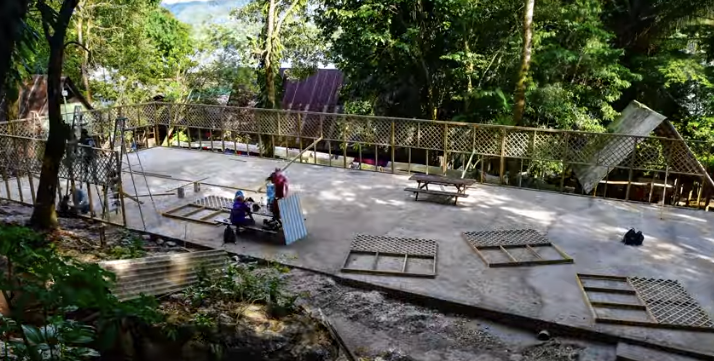
Side panels were dropped at the location by another team.
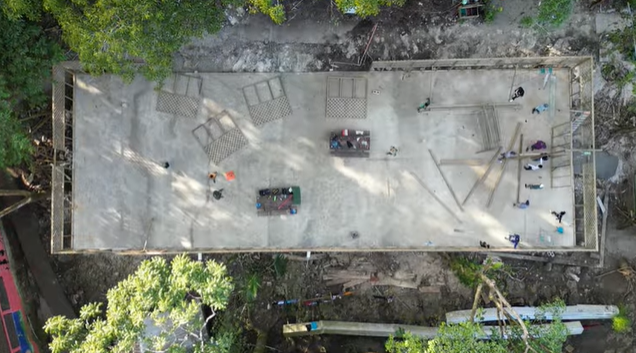
Top view of the construction site before the roof work started.
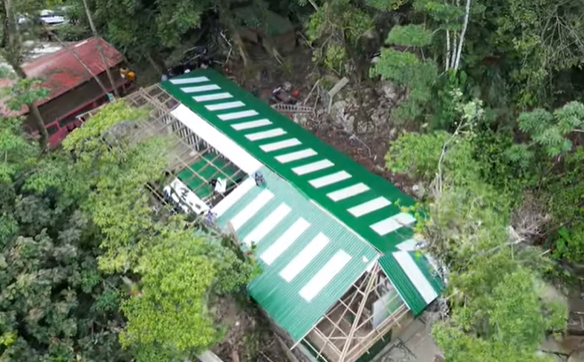
The roofing work was done by the maintenance staff with support from students. Our team did not get on the roof.
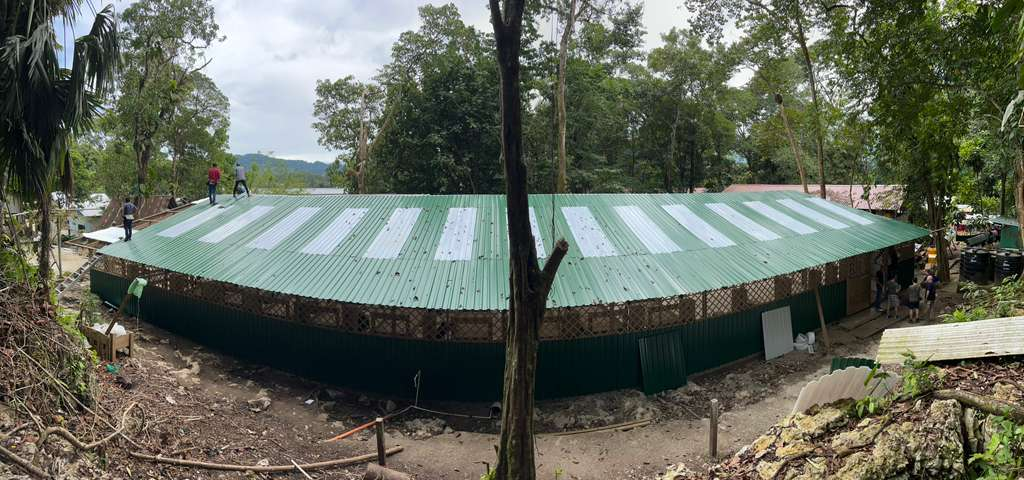
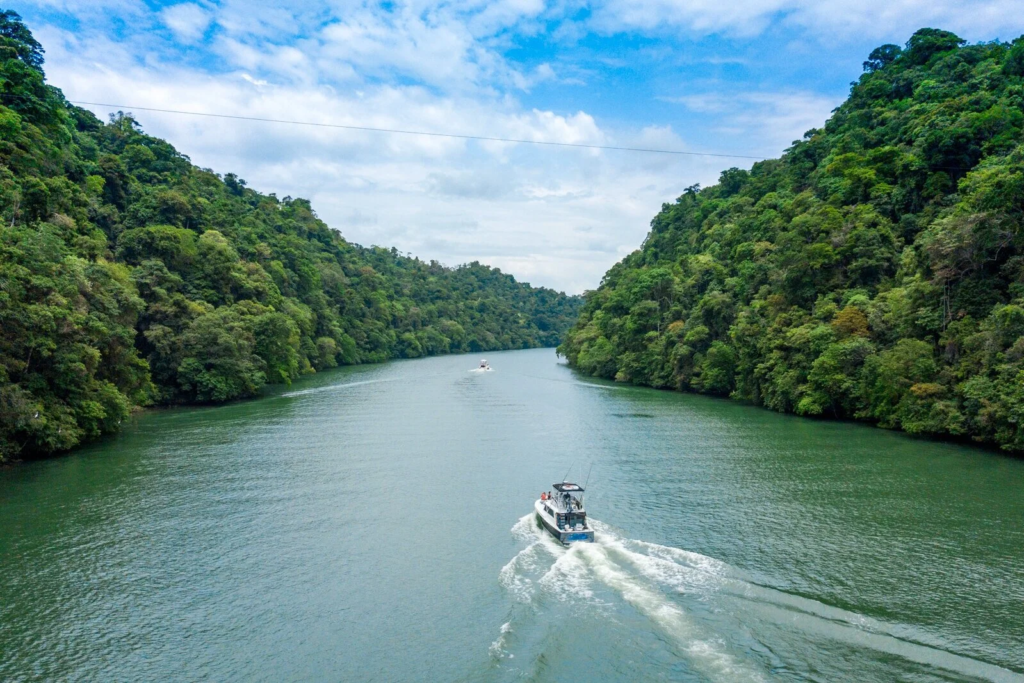
Access to Ak-Tenamit from Livingston, Guatemala, is via boat only.
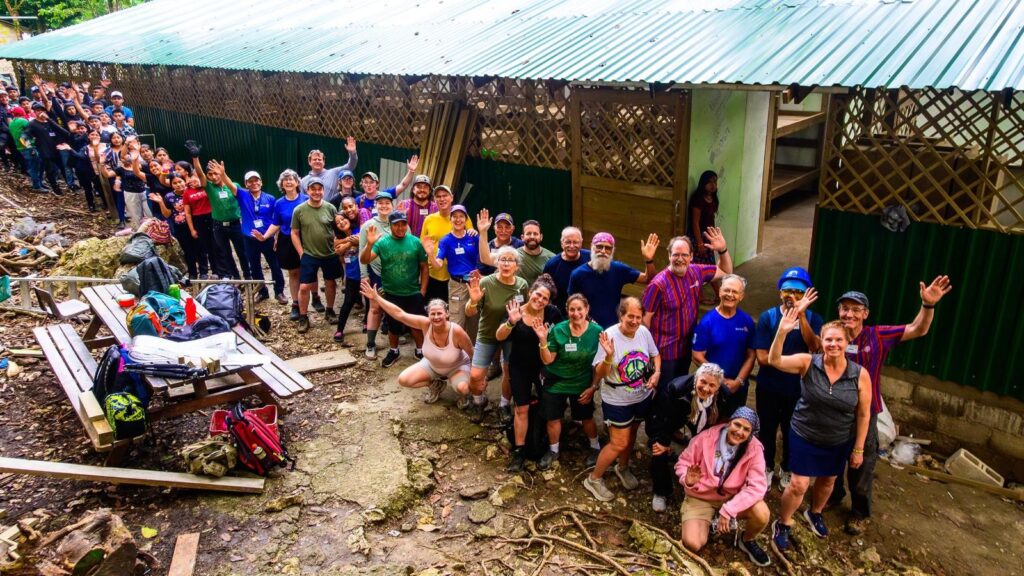
Full team: Rotarian and non-Rotarian volunteers, staff, and students who worked on the project.
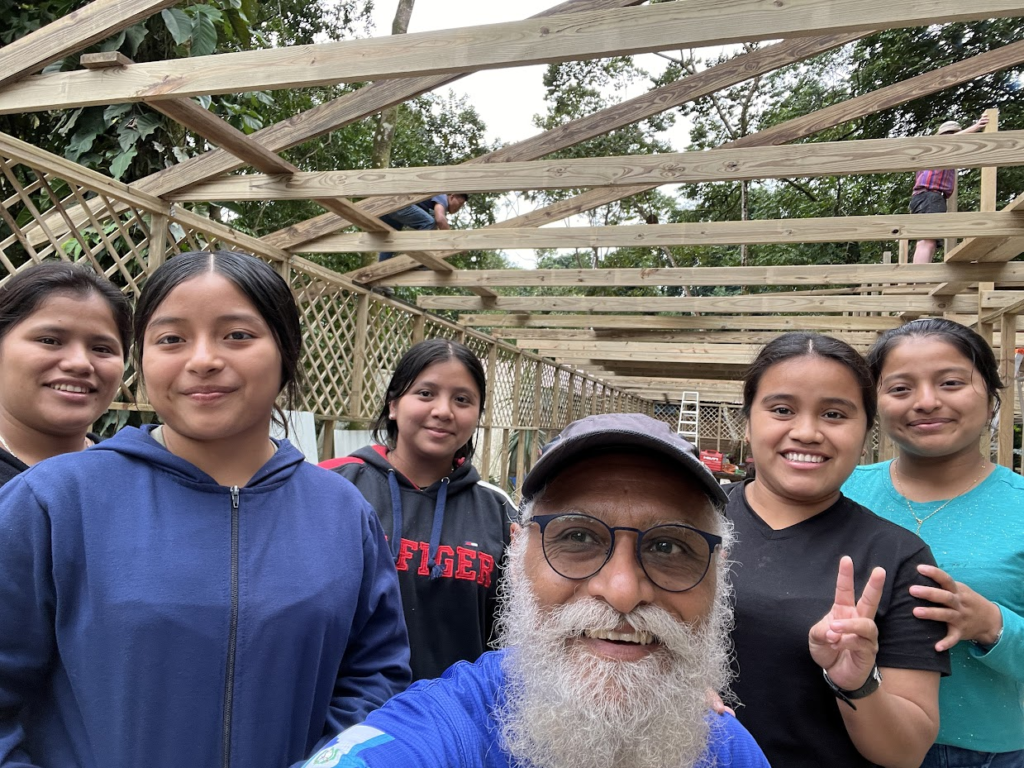
Students visited the site under construction and were very happy that we were building a dorm for them, and asked for this photo.
The following is whole project video by Josh.