

Modern‑day slavery is less about chains and auctions now and more about systems that keep some people and countries trapped for the benefit of others. The logic is old; the mechanisms and language are new.
From visible slavery to “legitimate” exploitation
In the past, enslaved people were seized or bought in villages and sold in markets. Families and plantation owners in the Americas and the Caribbean purchased enslaved Africans to work on sugar, cotton, and tobacco plantations, as well as in mines and households. Slavery was legally recognized and brutally visible: people were auctioned, whipped, branded, and entered as property in account books.
Many churches in Europe and the Americas initially tolerated or even defended slavery, sometimes citing biblical passages out of context to justify it. Later, some Christian leaders promoted converting enslaved people to Christianity and called them “brothers” in faith while still holding them as property. That created a stark moral contradiction: if all souls are equal before God, how can some be bought and sold?
This proves a point that the judges and social leaders who ought to defend the oppressed people and bring sanity, either conveniently forget their moral duties or get bought over to look the other way, or find ways to legitimize.
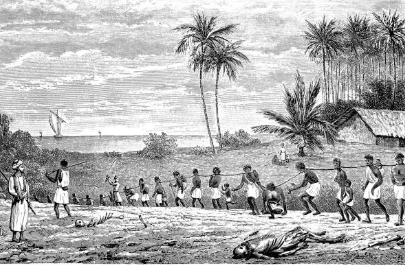
As more people engaged with scripture, Enlightenment ideas, and early human‑rights thinking, abolitionist movements grew. Quakers in Britain, Black abolitionists in the United States, and leaders like Toussaint Louverture in Haiti challenged slavery through moral argument, petitions, political organizing, and revolts. Slave‑owning elites, whose wealth depended on unpaid labor, resisted fiercely. Only after decades of struggle—lawsuits, uprisings, civil wars, and international campaigns—was slavery formally abolished in many countries.
Formal abolition, however, did not end severe exploitation. Economic and political power simply adapted.
From chains to contracts: new forms of control
Capitalist interests, especially in powerful states, continued to seek cheap labor and raw materials. Instead of openly owning people, they learned to control systems—laws, debts, trade rules, and governments.
A few examples make this clearer:
- Rubber and minerals in Congo
Under Belgian colonial rule, Congolese people were forced to collect rubber and minerals under horrific conditions. After formal colonialism ended, foreign mining companies continued extracting copper, cobalt, and other minerals in ways that kept local communities poor while exporting enormous wealth abroad. - Bananas and fruit in Central America
Large fruit corporations historically controlled vast tracts of land, railways, and ports in countries like Honduras and Guatemala. They backed or influenced coups and supported regimes that protected their concessions, while local workers remained underpaid, easily replaceable, and vulnerable to repression. - Oil in the Niger Delta
Multinational oil companies have extracted oil from Nigeria’s Niger Delta for decades, generating huge profits. Many nearby communities live with polluted water, damaged fisheries, and a small share of the revenue, while local elites and foreign shareholders benefit.
In these situations, foreign corporations or allied governments often:
- Support local elites or military rulers who sign away land and resources at low prices.
- Use loans and “development aid” to push countries to open markets and weaken labor and environmental protections.
- Allow or encourage local police or militias to suppress protests against land grabs, pollution, or dangerous working conditions.
On the surface, this is framed as “business,” “development,” or “investment.” But if you follow the money, a familiar pattern appears: those who own capital capture most of the gains, while those who supply labor and land remain stuck in poverty.
When people resist
When people see what is happening and push back, the response is often harsh.
- Iran, 1953
Prime Minister Mohammad Mossadegh tried to nationalize Iran’s oil, which had been dominated by a British company. A coup backed by foreign intelligence services removed him and restored a ruler more friendly to Western oil interests. - Congo in the 1960s
Soon after independence, Prime Minister Patrice Lumumba sought greater control over mining wealth. He was deposed and later killed in a context heavily shaped by Cold War powers and commercial interests. - Latin America during the Cold War
Leaders in Chile, Guatemala, and elsewhere who pushed land reform or nationalized key resources often faced coups or destabilization, with foreign governments claiming to fight communism while economic interests stood to gain.
In more recent cases, leaders who challenge powerful interests are quickly labeled dictators, drug traffickers, or threats to regional stability. Sanctions may be imposed, loans and aid withdrawn, or opposition groups quietly supported. If those tools fail, there can be overt or covert military intervention. Public justifications—defense of human rights or democracy—may contain some truth, but they often sit alongside hard economic calculations.
Old slavery vs. new slavery

The parallels become clearer when you compare older systems to newer ones:
Old slavery
- Enslaved Africans on Caribbean sugar plantations had no legal freedom; they were chained, bought, and sold.
- Their labor created enormous profits that helped build cities, banks, and industries in Europe and North America, while they lived and died in misery.
Newer systems that resemble slavery
- A child in West Africa harvesting cocoa for global chocolate companies is not “owned,” but may earn pennies a day in dangerous conditions, with no realistic escape.
- A miner in Congo digging cobalt for smartphones and electric car batteries works under laws, militias, and company practices that keep wages low and conditions unsafe, while profits flow to tech firms and investors abroad.
- A garment worker in Bangladesh sewing for major brands may work long hours in unsafe factories, for wages too low to meet basic needs, while finished clothes sell for many times the labor cost in wealthy countries.
On paper, these workers are free. They sign contracts or take jobs “voluntarily.” But when there are no real alternatives, when wages cannot support a dignified life, and when leaving the job means hunger or violence, the gap between formal freedom and effective bondage narrows. The chains are economic and structural instead of iron.
Limited avenues for justice
In theory, the world has institutions to protect weaker countries and vulnerable people:
- The United Nations is supposed to safeguard peace, self‑determination, and human rights.
- The International Criminal Court (ICC) is meant to prosecute war crimes and crimes against humanity.
- International financial institutions speak of “development,” “poverty reduction,” and “good governance.”
In practice, these bodies often depend on the funding, political will, and consent of powerful states—the same states whose governments and corporations benefit from the current arrangements. This produces patterns like:
- A small country that tries to hold a major foreign company accountable for pollution or unfair contracts may face threats of sanctions, lawsuits, or capital flight.
- Attempts to investigate leaders of powerful countries for serious abuses can stall, while cases against weaker states move more quickly.
- Aid and loans may be tied to conditions that open markets to foreign firms but restrict how much protection workers or the environment can receive.
Many poorer nations and communities come away feeling there is no neutral referee. When they raise complaints about exploitation, they are told to be “responsible partners,” “maintain stability,” or “improve their business climate”—phrases that often mean accepting rules written elsewhere.
Migration and quiet forms of dependence
For many people, this structural imbalance translates into personal decisions. In countries with limited jobs and skewed economies, choices often narrow to either struggling within a corrupt or unequal system or migrating to wealthier countries in search of opportunity. When a path is open, many leave.
For the first generation, migration can feel like starting over as near‑indentured labor. They work long hours in unfamiliar systems and languages to build a more secure life for themselves and, especially, for their children. The second generation may begin further ahead—better schools, safer neighborhoods, more options—but still wrestles with identity and belonging.
Even when material conditions improve, there are real, hard‑to‑measure costs. Acceptance in the new society may be partial. The loss of community, language, and social networks back home is rarely counted in economic statistics. Yet those losses shape how people see themselves and the world.
In some ways, this is like a dog adopted into a new household. Over time, the dog stops searching for its siblings and parents and focuses instead on bonding with the new family, learning how to please them and secure affection and care. Immigrants, too, often pour energy into fitting in and proving their worth to the new “home,” while the ties—and sometimes even the memories—of what they left behind slowly fade.
The underlying pattern
Taken together, these examples reveal a pattern that echoes the logic of slavery:
- In older systems, people were physically moved to plantations and forced to work under direct threat.
- In many modern systems, people remain on their own land but are pushed by debt, unequal trade, and weak bargaining power into work that does not match the value or risk of what they do.
The names and legal forms have changed—“trade,” “investment,” “development,” “security”—but for many at the bottom, the lived reality still feels like being trapped inside a system built mainly for the benefit of others. That is what people mean by modern‑day slavery: not a carbon copy of past bondage, but a continuation of deep, structured inequality dressed in new clothes.